Mapping Generational Preferences in Real-Time Interaction Formats Within Regulated Online Entertainment Ecosystems
Written by Finley Franke · Jun 24, 2026
Mapping Generational Preferences in Real-Time Interaction Formats Within Regulated Online Entertainment Ecosystems
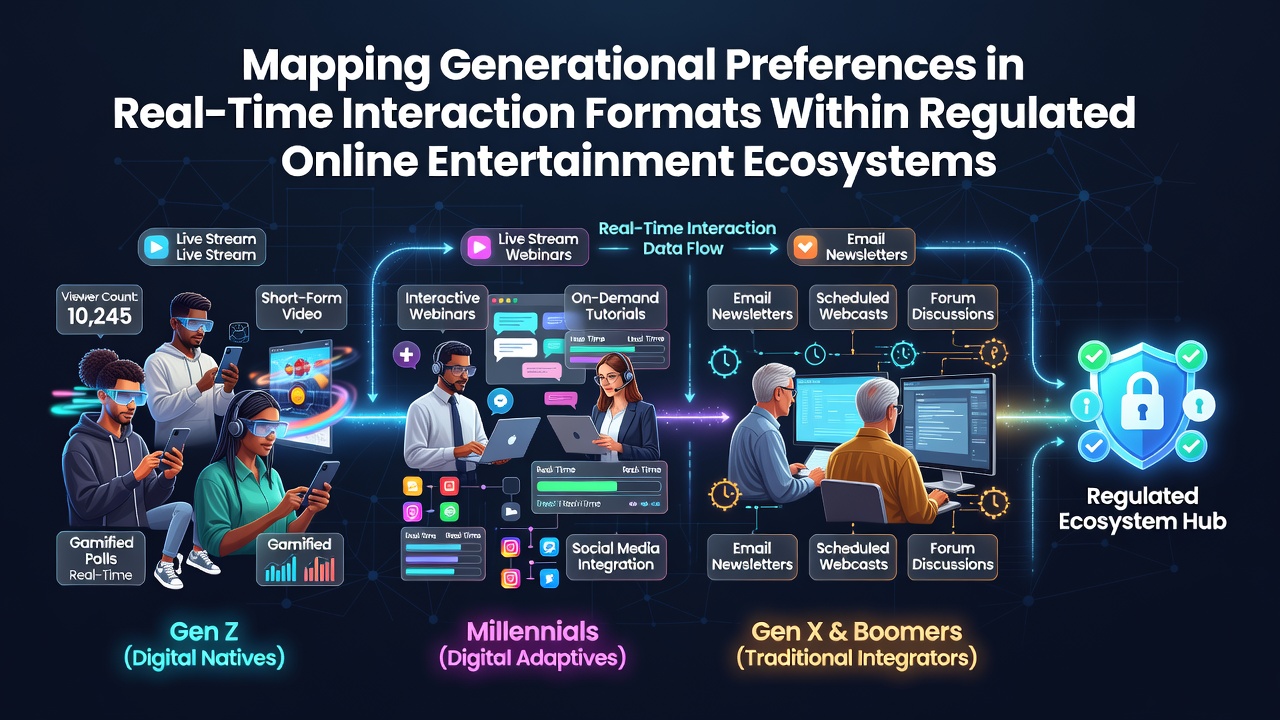
Regulated online entertainment ecosystems continue to evolve as operators track how different age groups select real-time interaction formats that align with their habits and device preferences. Data collected across multiple jurisdictions shows distinct patterns emerging between cohorts born after 1996 and those from earlier decades, particularly in environments where live dealer sessions, interactive broadcasts, and synchronized chat systems operate under strict compliance frameworks.
Analysts at research institutions note that platforms must adjust interface options because usage metrics reveal younger participants favor rapid visual exchanges while older groups often select structured text-based or voice-supported channels. These differences become measurable when regulators require transparent reporting on user engagement, a practice that gained momentum following updates to compliance standards in several regions during 2025.
Platform Design and Age-Based Interaction Trends
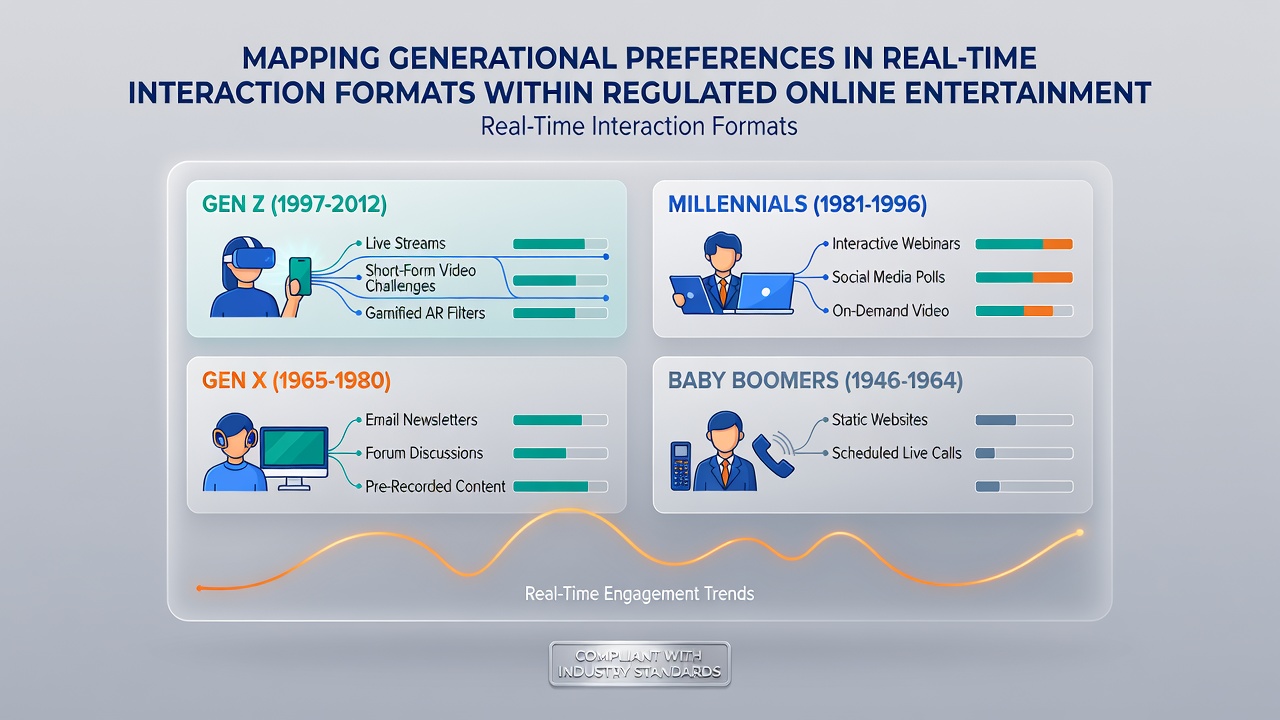
Operators in regulated markets have documented that real-time formats such as live video feeds, augmented overlays, and multi-user reaction tools attract varying levels of participation depending on the generation using the service. Studies compiled by academic teams at institutions in Canada and Australia indicate that individuals aged 18 to 25 demonstrate higher engagement with simultaneous video and polling features, whereas participants over 45 show stronger retention when text prompts and scheduled voice updates remain available.
Regulatory filings from the Australian Communications and Media Authority highlight how compliance teams monitor these preferences through anonymized session data, allowing companies to maintain fairness standards while accommodating multiple interaction styles. The same reports note that platforms incorporating modular design elements achieve steadier user retention across age brackets because each group can select the format that matches established routines.
Regional Data Patterns Emerging in Mid-2026
Figures released in June 2026 from cross-border industry reviews reveal that European and North American platforms report similar generational splits when measuring time spent in live interaction modules. Participants in the 26 to 40 range often combine mobile notifications with brief video check-ins, while those aged 55 and above prefer desktop sessions that include scheduled moderator responses and slower-paced updates.
One analysis conducted by researchers at a European university tracked over 120,000 sessions across five licensed operators and found that real-time chat volume peaked among younger users during evening hours, whereas voice-assisted features saw consistent uptake from mid-career professionals who accessed services during commuting windows. These observations align with earlier findings from Canadian provincial gaming authorities that emphasized the need for flexible format options within regulated environments.
Technical Infrastructure Supporting Varied Formats
Backend systems in regulated ecosystems must handle encryption requirements and audit trails regardless of which interaction format a user selects, yet the technical load differs based on the chosen medium. Live video streams demand higher bandwidth allocation and stricter latency controls compared with text or voice alternatives, prompting operators to deploy adaptive streaming protocols that scale according to user-selected preferences.
Engineers working with compliance teams have integrated preference detection algorithms that surface the most commonly chosen format for each demographic segment without storing personally identifiable information. This approach satisfies data protection rules while enabling platforms to pre-load relevant modules, reducing connection delays that might otherwise affect session continuity across different generations.
Compliance Requirements and Format Accessibility
Regulators in multiple jurisdictions require that all real-time interaction formats undergo testing for fairness, accessibility, and responsible use features before deployment. Accessibility standards now include captioning for video feeds and adjustable text sizing for chat interfaces, measures that address needs identified in user surveys spanning several age groups.
Trade associations representing licensed operators report that companies investing in these layered options experience broader demographic coverage because each cohort encounters fewer barriers when entering regulated spaces. Documentation submitted to oversight bodies in 2026 shows measurable increases in session duration when users retain control over their preferred interaction style rather than being directed to a single default mode.
Conclusion
Mapping generational preferences in real-time interaction formats requires ongoing collection of anonymized usage data, technical flexibility in platform architecture, and adherence to evolving regulatory standards across regions. Platforms that accommodate multiple formats while maintaining compliance continue to record participation from wider age ranges, reflecting the distinct habits documented in studies from Canada, Australia, and European research centers. As reporting cycles advance through 2026 and beyond, operators rely on these mapped patterns to refine system configurations without compromising the oversight frameworks that define regulated online entertainment ecosystems.