How Regional Licensing Frameworks Shape Dealer-Interactive Feature Availability in Smartphone Entertainment Systems
Written by Jonas Schulz · Aug 26, 2026
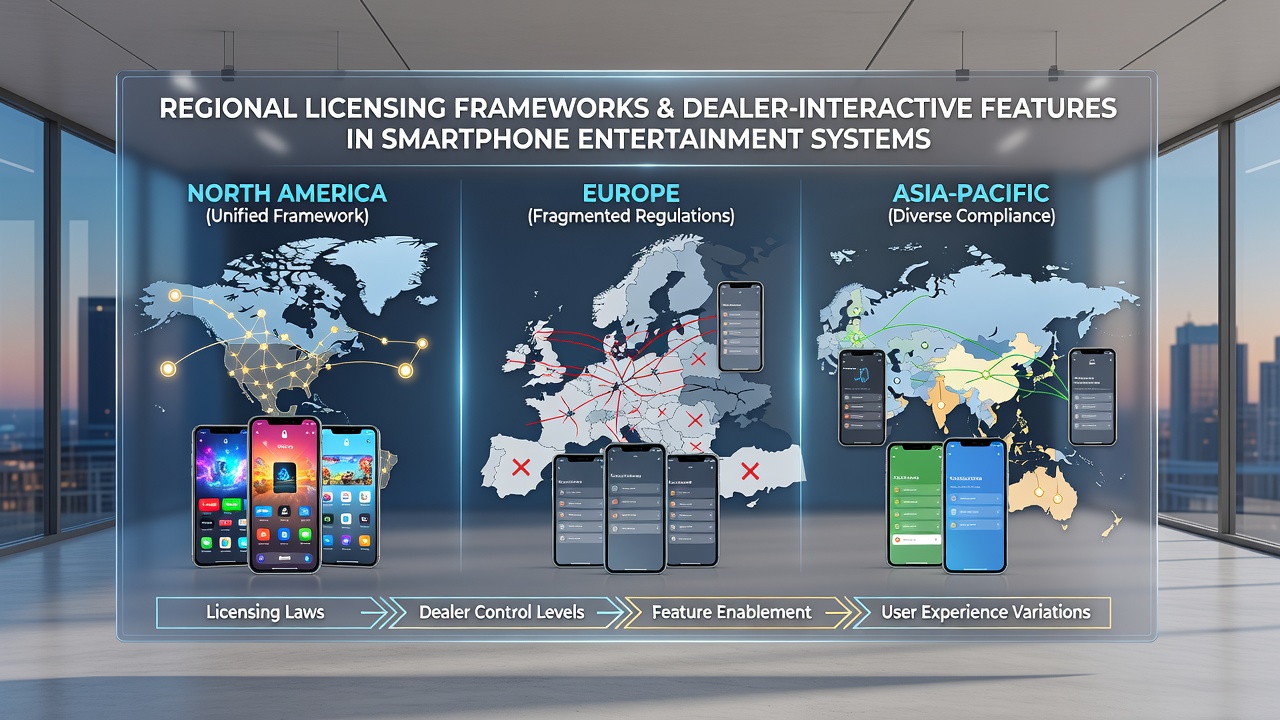
How Regional Licensing Frameworks Shape Dealer-Interactive Feature Availability in Smartphone Entertainment Systems
Regional licensing frameworks determine which dealer-interactive features reach users on smartphone entertainment platforms, and these rules vary sharply across jurisdictions because each authority sets its own technical standards, verification protocols, and content restrictions. In practice, operators must configure app builds so that live video streams, real-time chat functions, and multi-player table options activate only inside approved boundaries. Data from the Alcohol and Gaming Commission of Ontario shows that apps licensed there must embed geofencing layers that disable dealer video feeds when devices cross into unlicensed zones.
August 2026 brought new compliance deadlines in several North American markets, and those deadlines forced developers to segment their codebases further. Pennsylvania’s gaming regulators required additional encryption modules for dealer authentication systems, while neighboring states retained lighter protocols. The result is that a single smartphone title now ships with multiple feature toggles that flip on or off depending on the detected location at launch.
Core Technical Controls Embedded in Licenses
Licensing documents list precise specifications for dealer-interactive modules, and these specifications cover video resolution, latency thresholds, identity verification intervals, and audit logging formats. When a framework demands sub-200-millisecond round-trip times for dealer responses, development teams integrate edge servers inside the licensed territory; slower connections trigger fallback to recorded sequences instead of live streams. Observers note that such latency rules appear more frequently in European Economic Area licenses than in some Asian markets, producing noticeable differences in app behavior for travelers who switch regions.
Authentication requirements also diverge. Some frameworks mandate facial recognition tied to government databases before dealer tables open, whereas others accept device-level biometrics paired with periodic account checks. Because each rule set requires separate code paths, companies maintain parallel builds that reference the same core game engine but load distinct dealer modules.
Regional Examples and Implementation Patterns
European frameworks often separate live dealer permissions from slot and RNG game permissions, which means an operator can offer automated reels in one country while dealer tables remain blocked until a separate inspection clears the video infrastructure. In contrast, several U.S. state licenses bundle both categories under a single master agreement, yet they still impose state-specific geolocation checks that affect feature availability at the device level. Researchers at the University of Nevada’s International Gaming Institute documented how these bundled versus separated approaches alter update cycles, with separated systems requiring more frequent compliance submissions.
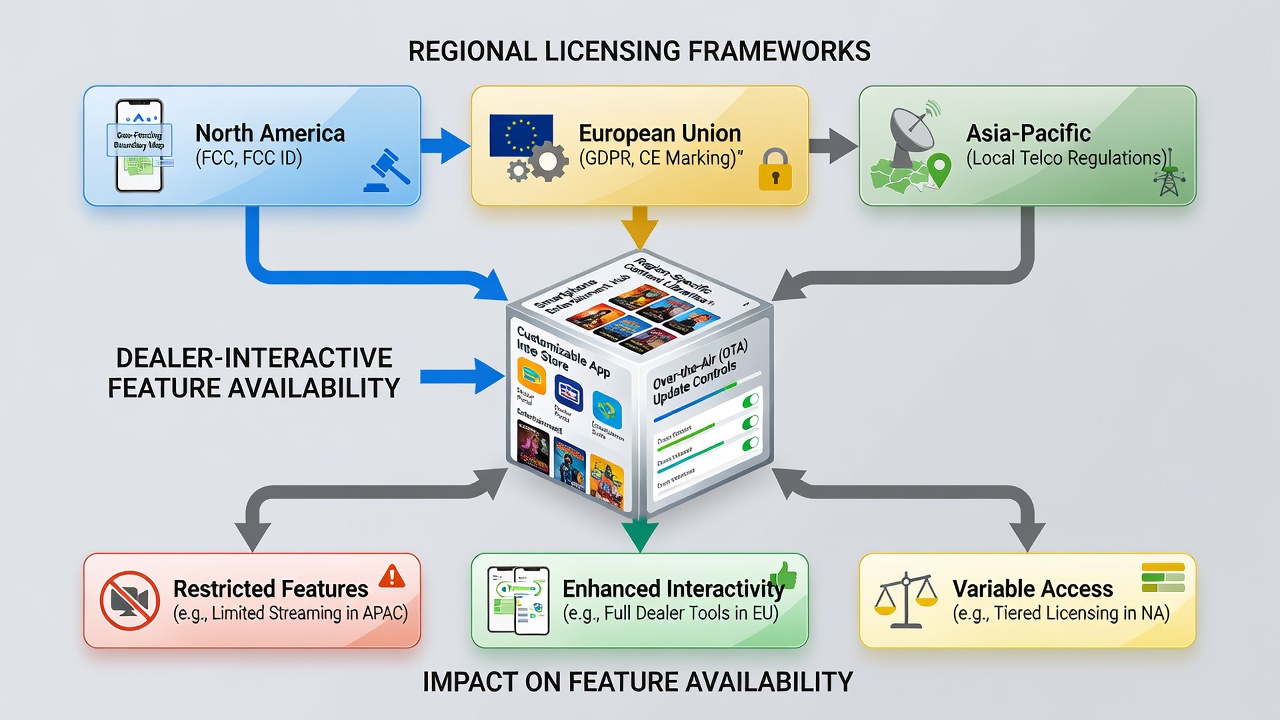
Asia-Pacific authorities add another layer by tying dealer features to local language support and currency handling. An app cleared in one jurisdiction may need to route dealer communications through domestic servers and display only approved languages before interactive tables become selectable. Those who have examined cross-border compliance reports find that currency conversion modules must also sync with dealer session logs, creating additional integration points that affect release timelines.
Update Cycles and Compliance Testing
Because each license carries its own testing calendar, operators schedule staggered releases so that new dealer animations or chat filters reach only the territories whose frameworks have already approved the changes. Automated testing suites now include region-specific virtual devices that simulate network conditions and regulatory checks before code reaches production stores. When a framework revises its rules, as occurred with several Canadian provincial updates ahead of August 2026, teams must re-run full validation suites on existing live modules even if no visual changes appear to users.
Third-party testing labs play a central role here. Labs accredited under one region’s framework cannot always certify builds for another region, which multiplies the number of external reviews required for a single global title. The added reviews extend the interval between feature conception and wide availability, and they also increase the chance that a dealer interaction mechanic passes in one market yet requires redesign for another.
Conclusion
Regional licensing frameworks continue to dictate the exact set of dealer-interactive options visible inside smartphone entertainment systems, and the technical architecture of these apps reflects the patchwork of requirements rather than a uniform global standard. As new deadlines arrive and existing rules receive revisions, developers maintain segmented code and region-aware delivery systems that keep feature availability aligned with each license’s current scope. The pattern shows no sign of simplification, because each authority retains authority over verification, latency, language, and audit standards within its territory.